
Why Does Your Knee Pain When Climbing Stairs?
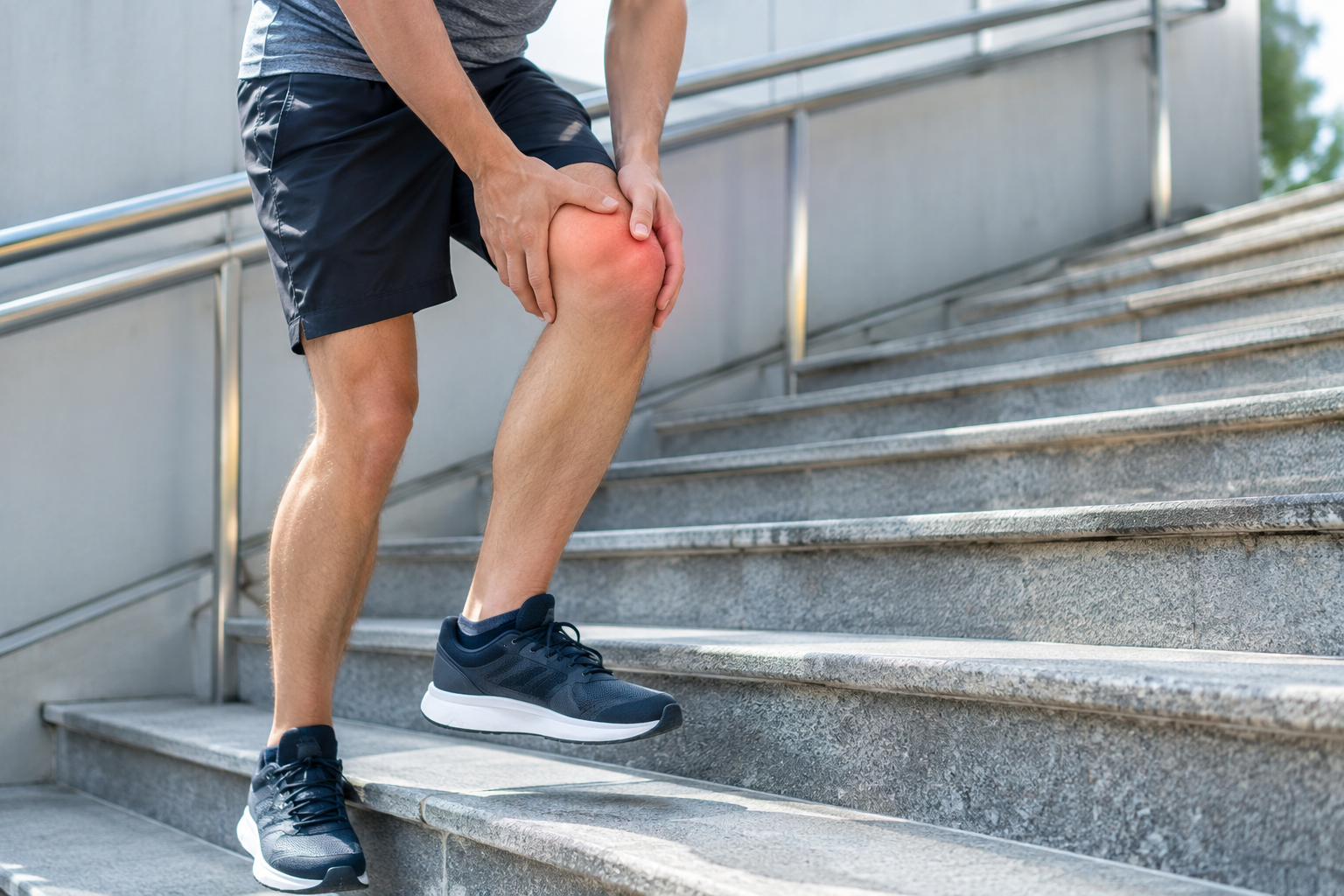
Why does your knee hurt when climbing stairs? Discover common causes, treatment options, and when to see an orthopedic specialist.
A flight of stairs can reveal a lot about your knees.
You may feel completely fine while sitting or walking on level ground, yet the moment you start climbing stairs, your knee begins to ache. You might even notice a sharp sensation around the kneecap or a feeling of stiffness that makes you slow down.
So, why does this happen?
Your knees handle considerably more stress when you climb or descend stairs. While occasional discomfort can result from overuse or weak muscles, recurring pain may be linked to arthritis, tendon problems, cartilage damage, or an old injury.
The important thing is not to assume that every painful knee needs surgery. In many situations, the right diagnosis and conservative treatment can make a significant difference.
Why Do Stairs Trigger Knee Pain?
Climbing stairs requires your knee to repeatedly bend while supporting much of your body weight. Your kneecap moves across the thigh bone, while muscles and tendons work together to control each step.
When the muscles around the knee are weak or the joint is irritated or damaged, this extra workload can expose the problem.
Going downstairs can also be uncomfortable because your muscles must control your body as you lower yourself. That is why some people notice pain more strongly while descending than climbing.
Common Reasons Your Knee Hurts on Stairs
1. Knee Osteoarthritis
Osteoarthritis can gradually change the smooth surfaces inside the knee. As cartilage becomes thinner, the joint may become painful and stiff.
Stair climbing, getting up from a chair, or walking after sitting for a long time may become increasingly uncomfortable. Some people also experience swelling or a grinding sensation.
2. Patellofemoral Pain Syndrome
If the pain feels like it is around or underneath your kneecap, patellofemoral pain may be one possible cause.
Repeated bending of the knee can irritate the area. Stairs, squats, running, and even sitting with your knees bent for a long time may bring on symptoms.
3. Weak Thigh or Hip Muscles
Your knees don’t work alone. Strong thigh and hip muscles help control the movement of the joint.
When these muscles are weak, your knee may not move as efficiently during each step. A properly designed strengthening program can help improve support and movement.
4. Patellar Tendon Problems
The patellar tendon connects your kneecap to your shinbone. Repeated jumping, running, or other high-impact activities can place stress on this tendon.
Pain usually develops at the front of the knee and may become noticeable during stairs, squats, or exercise.
5. Meniscus or Ligament Injuries
A sudden twist, awkward landing, or sports injury can damage the meniscus or one of the knee ligaments.
Along with pain, you may notice swelling, instability, clicking, or a sensation that your knee catches or locks.
6. An Old Knee Injury
Sometimes an injury that happened months or even years ago still affects the way your knee functions.
An old ligament injury, fracture, or cartilage problem can alter joint movement and gradually contribute to pain during activities such as climbing stairs.
What Does Knee Pain on Stairs Feel Like?
Not everyone’s symptoms look the same. You might notice:
- A dull ache after several steps
- Sharp pain around the kneecap
- Stiffness when bending the knee
- Clicking or grinding
- Swelling after activity
- A feeling that the knee is weak
- The knee giving way
- Pain while going up or down stairs
The location, timing, and type of pain can provide useful clues about its possible cause.
When Should You Get Your Knee Checked?
You don’t necessarily need medical attention for every minor ache. But persistent pain deserves attention, especially if it starts affecting your normal routine.
Consider seeing a doctor if your knee pain keeps returning, becomes worse, or comes with significant swelling, instability, locking, or difficulty walking.
You should also seek an evaluation after a significant knee injury, particularly if you cannot comfortably put weight on the leg.
How Do Doctors Find the Cause?
Diagnosis starts with your story.
An orthopedic specialist may ask when the pain started, what activities trigger it, whether you have experienced an injury, and whether you have swelling or stiffness.
They may then examine your knee, assess its movement and stability, and observe how you walk. An X-ray may help identify arthritis or bone changes, while an MRI may be useful when a meniscus, ligament, cartilage, or other soft-tissue problem is suspected.
Can You Treat Knee Pain Without Surgery?
In many cases, yes.
Treatment depends on what is actually causing the pain. Depending on your condition, your doctor may recommend:
- Physiotherapy
- Muscle-strengthening exercises
- Stretching and flexibility work
- Temporary activity modification
- Weight management
- Ice or heat when appropriate
- Pain-relieving medication under medical guidance
- Braces or other supportive devices
The best approach is usually not about doing less forever. It is about helping your knee move better and gradually returning to suitable activities.
Does Knee Pain Always Mean Surgery?
No.
Surgery may be considered when there is major structural damage, a serious ligament or meniscus injury, advanced arthritis, or symptoms that continue despite appropriate non-surgical treatment.
For many people, surgery is not the starting point. An orthopedic specialist first considers the least invasive treatment that is appropriate for the condition.
Simple Ways to Make Stairs Easier
If stairs trigger discomfort, a few practical habits may help:
- Hold the handrail when you need extra support.
- Take steady steps instead of rushing.
- Wear comfortable, supportive shoes.
- Avoid repeatedly pushing through severe pain.
- Keep your body weight within a healthy range.
- Build leg strength gradually.
- Follow the exercise or rehabilitation plan recommended for you.
Small changes can make everyday movement more comfortable while you work on the underlying problem.
When Should You See an Orthopedic Surgeon in Sharjah?
If knee pain repeatedly makes you avoid stairs, limits your activities, or continues despite simple measures, it is time to find out why.
An Orthopedic Surgeon in Sharjah can assess your symptoms, determine whether the problem involves the joint, muscles, tendons, cartilage, or ligaments, and recommend a treatment plan suited to your condition.
Getting an accurate diagnosis early may also help prevent a manageable problem from becoming more difficult to treat.
Frequently Asked Questions
Why does my knee hurt when I climb stairs?
Stair climbing puts additional stress on the knee. Arthritis, kneecap problems, muscle weakness, tendon irritation, and previous injuries can all cause pain.
Why does my knee hurt on stairs but not when walking?
Walking on a flat surface generally places different demands on the knee. Stairs require greater bending and muscle control, which can make an underlying problem more noticeable.
Can weak muscles cause knee pain when climbing stairs?
Yes. Weak thigh and hip muscles may reduce support around the knee and affect how the joint handles load during movement.
Is knee pain when climbing stairs always arthritis?
No. Arthritis is one possible cause, but knee pain can also result from muscle weakness, tendon problems, kneecap issues, meniscus injuries, or previous trauma.
Can knee pain on stairs improve without surgery?
Many conditions can improve with appropriate non-surgical care, including physiotherapy, strengthening exercises, activity changes, weight management, and medication when appropriate.
When should I see an orthopedic surgeon for knee pain?
Seek an evaluation if pain persists, gets worse, follows an injury, causes swelling or instability, locks the knee, or interferes with everyday activities.
Conclusion
Your knees shouldn’t have to make every staircase feel like a mountain.
If climbing stairs repeatedly causes pain, don’t simply accept it as a normal part of getting older. The cause may be treatable, and finding it early can help you choose the right approach.
From physiotherapy and strengthening exercises to medical treatment or, when necessary, surgery, there are several ways to manage knee problems. The first step is understanding what is actually happening inside your knee.
Leave a Reply
You must be logged in to post a comment.